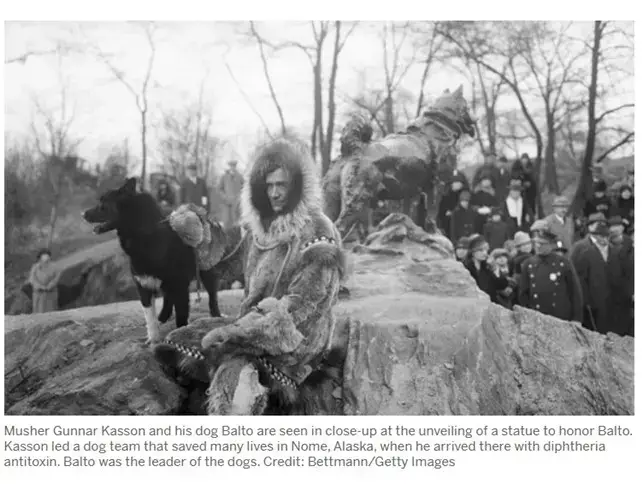
When it comes to heroic dogs, Balto is high on the list. The famous Siberian husky inspired a 1995 animated film and was immortalized as a statue in New York City’s Central Park for being part of a dogsled team that delivered lifesaving antitoxin to a remote Alaskan town that was struck by diphtheria in 1925. And now Balto’s DNA is offering new insight into how genetic diversity affects the health of dogs—past and present. In a study published in Science, biologists found that Balto’s genome is more diverse—and ultimately healthier—than that of most dog breeds today. His genes also suggest that he and his intrepid canine comrades in the 1920s had multiple traits that made them more fit to travel and survive in a harsh environment. The results reveal shifts over time not only in dogs’ genetics and ancestry but also in their genetic health.
Today’s sled dogs are even “faster and more durable” than those of Balto’s era. Balto’s genome analysis is a part of a broader research project called Zoonomia, a large-scale effort to understand the genetic diversity and evolution of mammals. The famous canine’s genome is an example of what researchers can learn from limited species population data.
Read the full article here.
References
- Young, L. J. (2023, April 27). The Lifesaving Sled Dog Balto Had Genes unlike Those of Dog Breeds Today. Scientific American. https://www.scientificamerican.com/article/the-life-saving-sled-dog-balto-had-genes-unlike-dog-breeds-today/?utm_source=Nature+Briefing&utm_campaign=82a1380b74-briefing-dy-20230428&utm_medium=email&utm_term=0_c9dfd39373-82a1380b74-47677880
Disclaimers
- The material in these reviews is from various public open-access sources, meant for educational and informational purposes only
- Any personal opinions expressed are those of only the author(s) and are not intended to represent the position of any organization(s)
- No official support by any organization(s) has been provided or should be inferred