
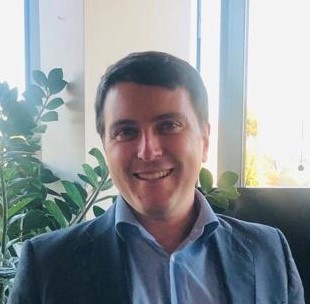
We continue with our Professional Identity and Medicines Development series. We are pleased to share a well-written essay from Academy alumni Matteo Bonetto Gambrosier. We extend our sincere gratitude to Matteo for his contributions to the IFAPP community.
“Discuss the development and status of your own Professional Identity and what it means in terms of your job, your career, and future prospects.“
“Over the 20 years of my working career, starting when I took my first ever paid job in my teens, I have struggled to find my professional identification. I was working as a waiter, but I was also a student, a sailor, a chef, and a caregiver. This uncertainty wasn’t reflected in my working position, as I was still accountable for my tasks and professional in delivering the best service ever to others. I was in a similar position as the pharmacists1, executing a task without completely owing who I was.
Later, when I finally decided to complete my medical career, I realized I had completely skipped one fundamental part of building my professional identity as a doctor: being a medical student. Once again, I was experiencing a separate or functional professional identity1, projecting myself as a doctor and not as a student. Supporting the professional identity of medical students and residents wasn’t integrated into my medical education and training at the university2, leading students to self-projecting and identify into something, without feeling to be part of a bigger community. There is definitively a need to teach professionalism3, but we mustn’t forget the role of a student and his personal identity. To date I admire people that are able to quickly project themselves into a new identity, as they can create connections and interactions right from the beginning, being recognized immediately as representative of a professional category.
In the last two years, however, I started my journey as a medical affairs professional in a pharmaceutical company and I am realizing how deeply things are changing. My professional Identity is clearer, and I am happy to represent my company and my profession to the external stakeholders. I moved from the operation room/ theatre to an office, literary from inside patients to their back, supporting them and doing the best I can 365 days. Despite this evolution, it is easier for me to define what I do, as in the past people had their own opinion on who I was.
During this academic program, I understood what my interests are, what I don’t like and in which direction I want to walk. Going beyond the routine, look into soft skills together with my medical knowledge will help me to create my story, which can be seen inside and outside the company to describe who I am and how I work. The additional interest for digital, economics, patient’s association, and market access, will eventually provide additional skills that might find a professional identity into some pharma companies.4
My development will be focused on managing people and budgets, setting very high goals, and empowering my team to work at their best. The medicine development academic program with IFAPP really gave me the opportunity to gain an overall picture of what characteristics are needed in a team and allowed me to reflect on what my personal ones are. As previously mentioned, I need to think to the next task before completing the one I am on, thinking about being a doctor before completing being a medical student, and I won’t hide from what I am.”
References
- Gregory P, Austin Z, Pharmacists’ lack of profession-hood: Professional identity formation and its implications for practice Canadian Pharmacists Journal / Revue des Pharmaciens du Canada. 2019
- Cruess et al. Reframing Medical Education to support Professional Identity formation Academic Medicine 2014
- Coulehan J. Today’s professionalism: engaging the mind but not the heart. Acad Med. 2005
- Evers M, Ghatak A et Al. A vision for Medical Affairs in 2025, McKinsey&Company2019
Disclaimers
- The material in these reviews is from various public open access sources, meant for educational and informational purposes only
- Any personal opinions expressed are those of only the author(s) and are not intended to represent the position of any organization(s)
- No official support by any organization(s) has been provided or should be inferred