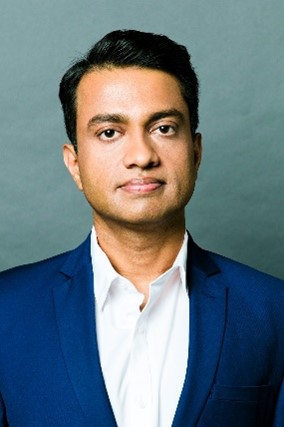
The Academy is pleased to continue its series on the perception of Professional Identity in Medicines Development, featuring content from graduates of the Academy Medical Affairs course. We have selected some of the top essays prepared by students of the course. Below is an essay written by Dr. Manmohan Singh. Thank you, Dr. Singh, for your refreshing perspective.
“Discuss the development and status of your own Professional Identity, and what it means in terms of your job, your career, and future prospects.”
“Professional identity is defined by Adams et al. as “the attitudes, values, knowledge, beliefs and skills shared with others within a professional group”1. In other words, it can be summarized by beliefs & understandings about one’s professional role or a person’s viewpoint of who they are in terms of their profession.
In terms of my development of professional identity, I would divide it into my educational training, interaction with pharmaceuticals as a physician, hands-on experience after joining the industry, interactions with internal and external stakeholders, and further education.
Since the development process is known to form during the educational training for their profession2,3, my training as a physician during under-graduation in medical school and later my specialization in M.D. pharmacology played an important role. The post-graduation particularly played a key role in understanding how pharmacology works and getting a fair bit of exposure while interacting with research organizations. I could pursue MSC in pharmaceutical sciences as an additional degree from Hibernia University and it helped me further to build my professional identity.
During medical school and as a practicing physician prior to joining industry, my interaction was mainly limited to clinical research and sales organizations that would meet to detail their products. While clinical research helped me understand how much emphasis pharmaceuticals provide on ethical research, interactions with sales organizations would make one feel that most things industry does is related to selling their products. The interaction with medical affairs and researchers involved in drug development was lacking.
The professional identity has a significant component of work medical affairs does and it mainly began after joining the industry. The interaction with peers and mentors working in medical affairs helped me to understand the key role they can play. My profile in medical affairs allowed me to interact with global and regional thought leaders which played a vital role in learning and developing respect not only to them but also to medical professionals working in drug development whom most global thought leaders regard with great esteem.
What professional identity means to me in my job can be explained by the impact medical professionals can play in drug development or a pharmaceutical industry. As a clinician, one plays a significant role in the community and towards patient care. However, there is a limitation to a number of patients one can reach. However, a pharmaceutical physician can work with many key opinion leaders and help them learn about a new drug, a new mechanism of action, disseminate new information which can strengthen their patient care. Also, one can work with regulators and help in early approval of the drug which can again make a difference in the lives of so many patients who had to otherwise wait for several months or years before they could access the drug. A clinician in me who misses seeing patients get answered by the broader role and bigger impact one can play towards patient care.
I work in the field of oncology. The role drug development has played in cancer care is enormous. To give an example, lung cancer-specific survival has improved from 26% among men with NSCLC that was diagnosed in 2001 to 35% among those in whom it was diagnosed in 2014 which is attributed to targeted therapy4. To realize what it would mean to patients, who can now live longer is a great component of my professional identity.
Finally, my learnings in IFAPP Academy allowed me to learn from veterans and interact with fellow students. Various concepts learnt have further contributed to the development of professional identity which I believe is a continuous process.”
References
- Adams K, Hean S, Sturgis P, Macleod Clark J. Investigating the factors influencing professional identity of first year health and social care students. Learn Health Soc Care. 2006;5:55–68. https://doi.org/10.1111/j.1473-6861.2006.00119.x.
- Tomer, Gunjan; Mishra, Sushanta Kumar (2015-06-01). “Professional identity construction among software engineering students: A study in India”. Information Technology & People. 29(1). doi:10.1108/ITP-10-2013-0181. ISSN 0959-3845.
- ^ Jump up to:a b Nyström, Sofia (2009). “The Dynamics of Professional Identity Formation: Graduates’ Transitions from Higher Education to Working Life”. Vocations and Learning. 2 (1): 1–18. doi:10.1007/s12186-008-9014-1. ISSN 1874-785X. S2CID 143402240.
- Howlader N, Forjaz G, Mooradian M J, et. al. The Effect of Advances in Lung-Cancer Treatment on Population Mortality. N Engl J Med 2020; 383:640-649DOI: 10.1056/NEJMoa1916623
Disclaimers
- The material in these reviews is from various public open access sources, meant for educational and informational purposes only
- Any personal opinions expressed are those of only the author(s) and are not intended to represent the position of any organization(s)
- No official support by any organization(s) has been provided or should be inferred