
A headache can be classified into two main groups— primary and secondary. Primary headaches refer to independent conditions that cause pain in the head, face, or neck. Examples of primary headaches include migraines and tension headaches. Secondary headaches occur as the result of another medical condition, such as an infection, stress, or medication overuse.
A migraine is a type of primary headache disorder that can cause severe pain and other symptoms. Migraine can cause intense headaches that last anywhere from a few hours to several days. A migraine headache usually affects one side of the head, but some people experience pain on both sides. A migraine episode can occur in four distinct phases, though not everyone experiences every phase.
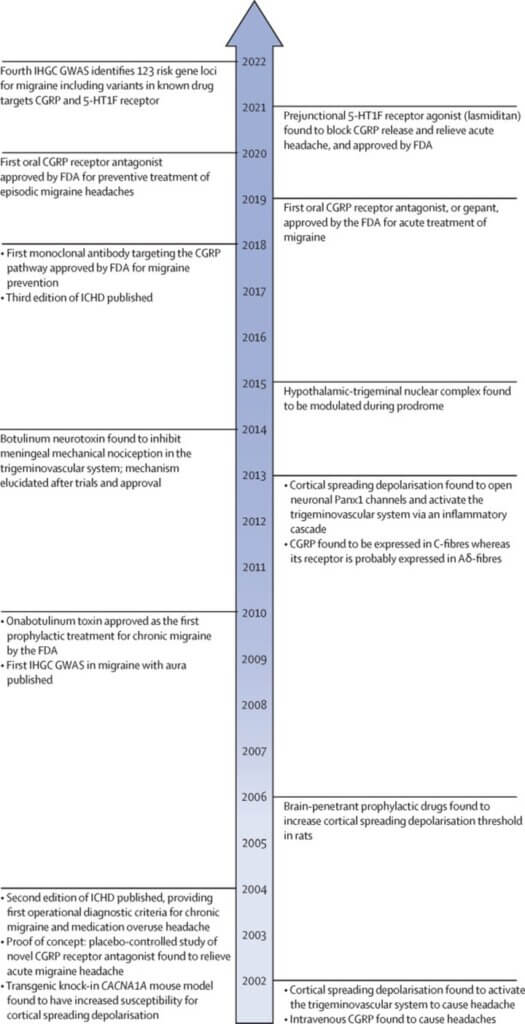
“The migraine landscape has evolved over the past 20 years, with refinements in classification and research design, a surge in new treatments developed with intent and not by chance, the emergence of 21st-century migraine genetics, and a refocusing on peripheral and central pain mechanisms (figure). One notable advancement has been the development of the International Classification of Headache Disorders (ICHD), presently in its third edition: the ICHD has provided standardized case definitions and nomenclature for migraine, including the first definitions of chronic migraine and medication overuse headache, as well as uniform criteria for patient selection in worldwide clinical research.”1
The below figure summarizes the major achievements of the last 20 years, during which we saw significant contributions toward a better understanding of migraine, as well as an improved selection of patients in clinical trials.
You can read the full text here.
References
- Moskowitz, M. A. (2022, November 1). Migraine research comes of age in the 21st century. The Lancet Neurology. https://www.thelancet.com/action/showPdf?pii=S1474-4422(22)00398-2
Disclaimers
- The material in these reviews is from various public open-access sources, meant for educational and informational purposes only
- Any personal opinions expressed are those of only the author(s) and are not intended to represent the position of any organization(s)
- No official support by any organization(s) has been provided or should be inferred