
“The Covid pandemic has posed substantial challenges to societies and health systems globally. Many of these challenges have been technical, such as the development of effective vaccines and therapies. The challenges that have proven most vexing and controversial, however, involve determining the “right” course of action on a number of critical issues: how to allocate scarce vaccines, whether to introduce mask and vaccine mandates, whether to restrict travel, and whether to intentionally infect research participants in order to test vaccines, to name a few. The “right” decision in these cases is neither a technical matter nor resolvable by additional evidence; rather, it requires value judgments and, thus, ethics.
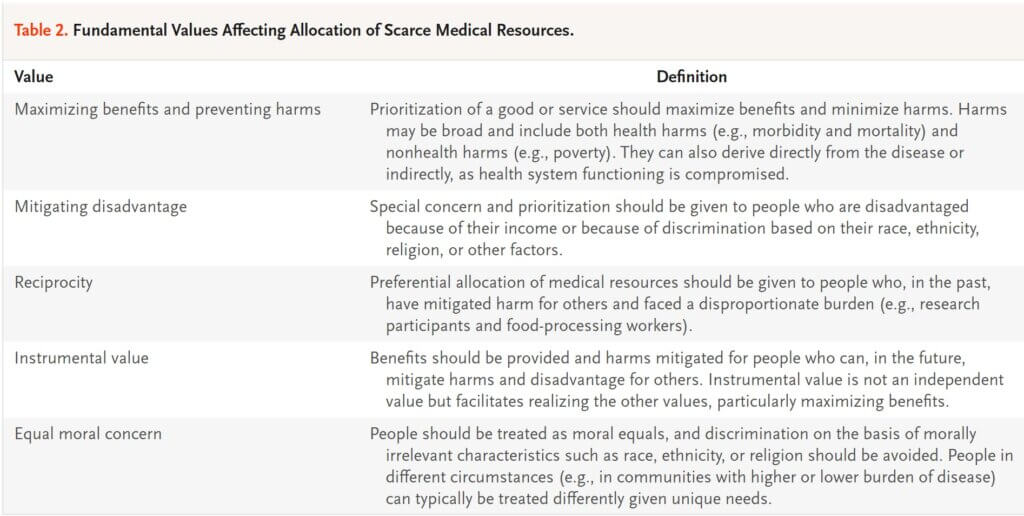
The priorities established for allocating resources during Covid reveal agreement on the importance of five substantive values in allocating resources: maximizing benefits and preventing harms, mitigating disadvantage, reciprocity, instrumental value, and equal moral concern (see Table). Explicit recognition of these values helps to elucidate essential ethical considerations, but further insight is needed to determine which values should be prioritized in particular circumstances.
The world has not yet had time to fully elucidate the lessons of Covid and apply them to preparations for future emergencies. But policymakers should heed the lessons of the pandemic by appreciating the ethical, not just the technical, dimensions of all challenges faced during emergencies; by starting from existing knowledge about the right values and principles to guide policy; and by ensuring that ethics expertise is present before an emergency response is conceived and is effectively integrated into decision making. Achieving these aims will require a sustained, focused effort to enhance ethics capacity at key global, national, and local public health organizations, academic institutions, and governmental agencies.”1
Continue reading here.
References
- Emanuel, E. J., Upshur, R. E., & Smith, M. J. (2022). What Covid Has Taught the World about Ethics. New England Journal of Medicine, 387(17), 1542–1545. https://doi.org/10.1056/nejmp2210173
Disclaimers
- The material in these reviews is from various public open-access sources, meant for educational and informational purposes only
- Any personal opinions expressed are those of only the author(s) and are not intended to represent the position of any organization(s)
- No official support by any organization(s) has been provided or should be inferred