
Eight billion people on our planet! This is what the UN forecasts based on the rhythm of growth of the last few decades. In an era characterized by wars, food shortages and climate change, this news may not be welcome to all. However, the UN emphasizes that the population increase is due in part to improved health standards and a steep decline in child mortality.
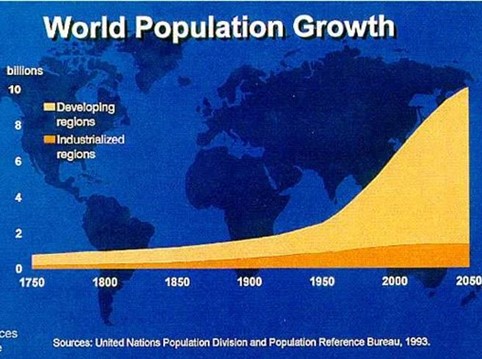
As indicated in the attached figure, the global population will hit 8 billion people on November 15, 2022, moving to 8.5 billion people in 2030 and up to 10.4 billion by the end of the 21st century. Growth dynamics will differ among continents: the Far East and Southeast Asia will remain the most populous on the planet, but the greatest growth will take place in Africa (Congo, Egypt, Ethiopia, Nigeria). In the year 2023, for the first time in the history of our planet, India will overtake China to become the most populous country, with more than 1.4 billion people.
Global data inform us that in 2019, the average life expectancy reached 72 years and 8 months,with an increase of about 9 years as compared to 1990. Prior to Covid, the increase in life expectancy was projected to be even greater. In 2050, the global life expectancy will reach 77 years and 2 months.
The female fertility index, however, has declined. In 2021, fertile women gave birth to an average of 2.3 children as compared to 5 children in 1950. There is significant continental variation in this data. Sub-Saharan Africa and Latin America still have high levels of adolescent pregnancies.
Infant mortality is greatly diminished: UNICEF underlines that in 2019 this index was at the lowest level in its history. Children’s deaths in the first 5 years of life were 5.2 million as compared to 12.5 million in 1990—a 60% reduction.
The population growth curve will plateau between now and 2100 due largely to the decline in the fertility index. As a result of this trend, more and more countries will be populated by elderly people, again, with large continental differences. In the year 2050, people over 65 in Europe will represent 26% of inhabitants, but in Africa they will be only 4.6% of the entire population.
References
- World population to reach 8 billion this year, as growth rate slows. (2022, July 15). UN News. https://news.un.org/en/story/2022/07/1122272
Disclaimers
- The material in these reviews is from various public open access sources, meant for educational and informational purposes only
- Any personal opinions expressed are those of only the author(s) and are not intended to represent the position of any organization(s)
- No official support by any organization(s) has been provided or should be inferred