
As the landscape of global healthcare continues to evolve, so too does the professional identity of those working in medicines development and the career lessons learned therein. For many, the journey into this field is not linear. Instead, it is a combination of early influences, shifting career paths, and a deepening sense of purpose tied to patient impact.
At the GMDP Academy, we ask professionals to pause and reflect on these themes as they complete the Certification in Medicines Development (CMD) program. Each year, participants draft End of Program Assessment essays in which one component asks them to explore how their work has shaped who they are and where they want their journey to take them next. Carmine Colavecchia’s essay stood out as one of the 2024 cohort’s top submissions. His story exemplifies how commitment, adaptability, and a passion for patient care come together to define him as a professional in biopharma.
While Carmine’s story is uniquely his own, it highlights experiences familiar to many of us. Here are three career truths from the front lines of medicines development that apply broadly to anyone navigating their professional path:
📖 Early influences shape long-term purpose
Whether it’s mentorship, teaching, or early exposure to service-oriented work, these foundational experiences often influence how we lead, collaborate, and contribute in our roles. It can be really valuable to invest in these moments, whether as a learner or a mentor.
📖 Career changes are part of growth, not setbacks.
Many professionals will shift roles, industries, or focus areas. While change can feel like a loss of identity, it often opens doors to new ways of contributing and finding meaning in your work. Embracing these transitions can lead to unexpected and fulfilling opportunities.
📖 Real-world evidence connects science to patient care.
Generating and applying real-world data is essential to making treatments effective in the real world. It bridges the gap between research and clinical outcomes and empowers better decisions for patients and clinicians alike.
These truths come alive in Carmine’s essay, which we are honored to share below.
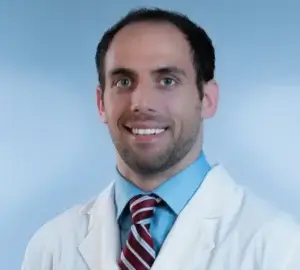
The journey toward establishing a professional identity and sense of purpose often starts early in life and is marked by a series of transformative experiences and milestones. For me, this journey began at a young age in my education and training and has culminated in a fulfilling role at Pfizer. My professional identity is rooted in a commitment to improving patient care through research and evidence generation, as well as the values instilled in me by my parents. After weathering several reorganizations and overcoming other changes within Pfizer, I have found a role that aligns with my values and allows me to contribute to meaningful changes in healthcare.
My initial career aspiration was to pursue a career in academia, inspired by my mother, a kindergarten teacher, and my father, a soccer coach. From a young age, I tutored kids after school in my mom’s classroom, because my mom taught at my school and tutored children every day. I felt a tremendous sense of joy and fulfillment when my students grasped the elusive concepts they were unable to understand in the classroom and turned their grades around. I continued teaching in college while earning my Doctor of Pharmacy and started two student programs while working at Houston Methodist Hospital (HMH) as a pharmacist. Helping others succeed through education brings me a great sense of joy and purpose, and is directly linked to my professional identity.
While working full-time at HMH, I undertook a PhD in Pharmaceutical Health Outcomes Research. My academic journey was fueled by a desire to lead real-world evidence research using real-world data. Although I envisioned a future in academia, my career path took an unexpected turn when I received an offer for a field medical position at Pfizer. “Big Pharma” was considered the “dark side” of healthcare, with a Star Wars-like mentality of good versus evil from my peers at the hospital. This transition from working at a hospital to biopharma felt somewhat like losing my professional identity due to the significant change in my career path and the judgment that could be perceived from friends and colleagues. I combated this struggle with my professional identity by keeping my eye on global opportunities. Demonstrating my capabilities in field medical and knowledge in real-world evidence, I advanced to a leadership position, where I now oversee the generation of evidence in benign hematology global medical affairs.
Leading the evidence generation efforts in benign hematology has given me a sense of fulfillment and purpose, as I witness the direct impact of our work on improving patients’ lives. While I miss the didactic and experiential aspects of teaching as part of my current job, I fulfill this part of my professional identity by going out of my way to lecture at universities and mentor students, residents, and colleagues. My professional identity has evolved into a commitment to advancing healthcare through research and evidence generation, ensuring that clinicians can make the best treatment decisions for their patients by having a clear picture of the benefit-risk profiles of the medicines in my portfolio.
Looking ahead, I aspire to lead a team dedicated to generating practice-changing evidence that can transform patient care on a global scale. I am driven by our constantly evolving profession and bring a joyous attitude to work, despite the challenging times within biopharma. In my next role, I plan to play a larger role in helping a team achieve their career aspirations, allowing me to bring a more defined teaching/coaching aspect into my day-to-day activities. I would like to thank the GMDP academy for helping me take another step forward in my professional journey.
About the Author
Carmine Colavecchia, PharmD, PhD, serves as a Sr. Director on the Global Medical Benign Hematology team and responsible for the evidence generation strategy for Hemophilia and Sickle Cell Disease at Pfizer. Carmine focuses on determining the real-world effectiveness and safety of medicines in rare diseases and generating breakthrough evidence to support clinician and patient decision-making.
Take the Next Step in Your Medicines Development Journey
If Carmine’s journey resonates with you, consider taking the next step in your own. The GMDP Academy’s Certification in Medicines Development (CMD) Program—offered in partnership with King’s College London—is designed for professionals seeking to deepen their impact, expand their career possibilities, and build a lasting identity in the world of medicines development.
Applications for the next CMD cohort are now open.
🔗 Learn more and apply now
Disclaimers
- The material in these reviews is from various public open access sources, meant for educational and informational purposes only
- Any personal opinions expressed are those of only the author(s) and are not intended to represent the position of any organization(s)
- No official support by any organization(s) has been provided or should be inferred